

ATELIER JMA-FR TRANSFORMATION
Beauregard inclusif
Orientation transformation
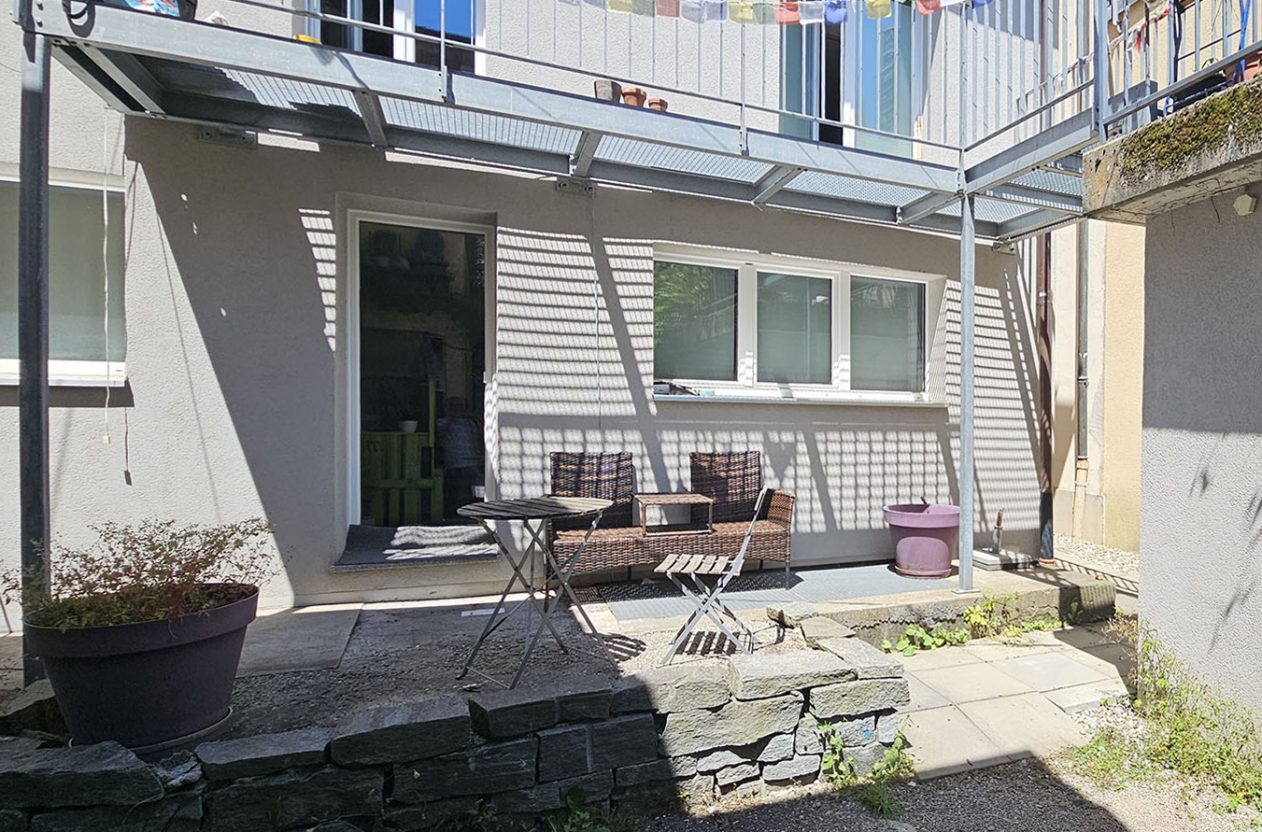 Quartier de Beauregard, Fribourg. Photo : © Florinel Radu
 Contenu CONTENT
La ville est le miroir des rapports de pouvoir qui façonnent notre société. Ignorer cette réalité, c’est renforcer les discriminations sociales et de genre en les ancrant dans nos espaces de vie. Cet atelier vous invite à adopter une nouvelle perspective, axée sur les besoins de la diversité des habitant.es, et vous offre l’opportunité de concevoir une architecture véritablement inclusive. Une architecture inclusive favorise les interactions et les échanges, tissant ainsi du lien social, un élément crucial pour l’adaptation au changement climatique. Le quartier Beauregard à Fribourg constitue un terreau fertile pour cette démarche. Son histoire témoigne à la fois de la marginalisation d’une population vulnérable et de la tension constante entre la pression immobilière et la préservation du patrimoine bâti. La proximité de la gare, les vues paysagères exceptionnelles, la diversité du tissu urbain et l’abondance d’espaces résiduels confèrent au Beauregard un potentiel indéniable pour devenir un quartier inclusif. Les interrogations centrales de ce projet d’ensemble, tant au niveau urbanistique que de détail architectural, portent sur : quoi préserver et/ou améliorer, où et comment introduire de la nouveauté, quels changements minimaux peuvent générer un maximum de bien-être collectif, et comment améliorer la qualité des espaces de vie sans induire la gentrification du quartier.
The city reflects the power dynamics that shape our society. Ignoring this reality reinforces social and gender discrimination by embedding it in our living spaces. This studio invites you to adopt a new perspective, focused on the needs of the diverse residents, and offers you the opportunity to design truly inclusive architecture. Inclusive architecture fosters interaction and exchange, thus building social links, a crucial element for adapting to climate change. The Beauregard neighborhood in Fribourg provides fertile ground for this approach. Its history bears witness to both the marginalization of a vulnerable population and the constant tension between real estate pressure and the preservation of built heritage. The proximity of the train station, the exceptional landscape views, the diversity of the urban fabric, and the abundance of residual spaces give Beauregard undeniable potential to become an inclusive neighborhood. The central questions of this overall project, both at the urban planning level and in terms of architectural detail, concern: what to preserve and/or improve, where and how to introduce novelty, what minimal changes can generate maximum collective well-being, and finally, how to improve the quality of living spaces without inducing gentrification of the neighborhood.
Objectifs d’enseignement TEACHING AIMs
- Développer un positionnement personnel critique et éthique dans le cadre de problématiques architecturales complexes.
- Élaborer un projet d’architecture et urbain spécifique, plausible, pertinent et argumenté.
- Aborder et développer le projet d’architecture selon différents niveaux de compréhension : transdisciplinarité et thématiques périphériques à l’architecture, multiculturalité, degrés d’abstraction.
- Définir de manière autonome une problématique architecturale complexe du projet d’architecture : thématique, objectifs, site d’intervention et programme.
- Développer une approche itérative du projet : générer et tester systématiquement des idées, analyser et évaluer les options de projet.
- Maîtriser l’interaction entre les utilisateurs, les bâtiments et l’environnement.
- Développer de méthodes de travail personnelles et collaboratives.
- Develop a critical and ethical stance on complex architectural issues.
- elaborate a specific architectural project taht is plausible, relevant and well-argued.
- Approach and develop architectural projects according to different levels of understanding : transdisciplinarity and themes connected to architecture, multiculturalism, and degrees of abstraction.
- Define in an autonomous way a complex architectural problematic: theme, objectives, intervention site and program.
- Develop an iterative approach to the project.
- Master the interaction between users, buildings and the environment.
- Develop personal working methods.
Formes d’enseignement TEACHING METHODS
La méthode d’enseignement est basée sur une pédagogie « de découverte » qui vise à créer les conditions favorables pour le développement personnel de l’étudiant·e ; ce qui compte est l’évolution individuelle, la différence entre ce que vous savez faire à la fin par rapport au début du semestre. Le travail de projet aura lieu sous la forme d’un laboratoire de recherche, combinant l’action, la réflexion et le dialogue critique. Il va s’appuyer sur des cours théoriques.
The teaching method is based on a pedagogy of „discovery“ that aims to create favourable conditions for students‘ personal development. What matters is the individual evolution, the difference between what you know how to do at the end of the semester compared to the beginning. Project work takes the form of a research laboratory, combining action, reflection, and critical dialogue, both in teams and individually. It will rely on theoretical courses.