

ATELIER JMA-GE 1
Hospitalité Tattes
 © Vanessa Lacaille
Contenu /content
À Genève – ville devenant métropole –, notre capacité à habiter ensemble, à accueillir les plus fragiles d’entre nous, est en péril. L’atelier poursuivra son engagement pour une architecture au service d’une ville hospitalière. Nous invitons nos étudiant·e·x·s à travailler sur un site et un projet concret : le foyer des Tattes, le plus grand centre d’hébergement pour requérant·e·x·s d’asile en Suisse.
Le foyer, situé sur la commune de Vernier, a été construit dans les années 90 pour héberger, au départ, des travailleur·euse·x·s saisonnier·ère·x·s, puis aujourd’hui des requérant·e·x·s d’asile. Pouvant accueillir plus de 500 personnes d’une soixantaine de nationalités différentes pour des périodes allant de quelques mois à plusieurs années, les bâtiments, devenus vétustes, n’offrent ni espaces d’hébergement, ni espaces communs, ni espaces extérieurs adaptés.
En impliquant le propriétaire et gestionnaire du lieu (Hospice Général) ainsi que la commune (Ville de Vernier), nous invitons nos étudiant·e·x·s à réfléchir à la transformation sensible et radicale du lieu et de sa relation avec la ville. Plus que de la mise à l’abri, il s’agit de penser un habitat digne. Plus qu’un centre d’hébergement, il s’agit d’imaginer collectivement un refuge, un chez-soi.
En lien avec les résident·e·x·s et les travailleur·euse·x·s social·e·x·s, nous travaillerons à deux niveaux. D’une part, le projet se fera sur un site existant et occupé. Il s’agira nécessairement de composer avec la matière bâtie déjà là ; de prendre soin, de réparer, d’augmenter plutôt que de démolir pour reconstruire. Cette économie de moyens est aussi un engagement à travailler à partir des empreintes et du vécu de ce lieu habité. D’autre part, tout au long du semestre, en co-conception avec les résident·e·x·s, nous mènerons un travail sur l’imaginaire d’habiter, du chez-soi pour elleux — au plus près de leurs récits, de leurs attentes, de leurs rêves. Il s’agit là de questionner en profondeur l’hospitalité de nos métropoles.
In Geneva — a city becoming a metropolis — our capacity to live together, to welcome the most vulnerable among us, is under threat. The studio will continue its commitment to an architecture in service of a hospitable city. We invite our students to work on a real site and project: the Foyer des Tattes, the largest asylum-seeker accommodation center in Switzerland.
The center, located in the municipality of Vernier, was built in the 1990s, initially to house seasonal workers and today asylum seekers. Able to accommodate more than 500 people from around sixty different nationalities for periods ranging from a few months to several years, the now-dilapidated buildings offer neither adequate housing spaces, nor communal spaces, nor suitable outdoor spaces.
By involving the site’s owner and manager (Hospice Général) as well as the municipality (City of Vernier), we invite our students to reflect on the sensitive and radical transformation of the place and its relationship with the city. Beyond mere shelter, the aim is to think through dignified housing. Beyond an accommodation center, the aim is to collectively imagine a refuge, a home.
Working alongside residents and social workers, we will operate on two levels. On the one hand, the project will take place on an existing, occupied site. It will necessarily mean working with the built matter already there — caring for it, repairing it, adding to it rather than demolishing and rebuilding. This economy of means is also a commitment to work from the traces and lived experience of this inhabited place. On the other hand, throughout the semester, in co-design with residents, we will carry out work on the imagination of dwelling, of home, for them — staying as close as possible to their stories, their expectations, their dreams. This is fundamentally about questioning the hospitality of our metropolises.
Objectifs d’enseignement / Teaching objectives
L’atelier propose d’agir concrètement pour l’hospitalité dans la ville contemporaine en y travaillant sur un site réel et avec celleux qui y vivent. Il s’agit d’apprendre, d’imaginer et d’agir sur notre territoire par la mise en relation directe et ouverte avec ses habitant·e·x·s. Les étudiant·e·x·s sont invité·e·x·s à construire individuellement et collectivement un regard sensible aux situations habitées, une aptitude critique et un engagement au service de leur territoire soumis aux enjeux politiques, sociaux et environnementaux contemporains.
The studio proposes to act concretely for hospitality in the contemporary city by working on a real site and with those who live there. The aim is to learn, imagine, and act on our territory through direct and open engagement with its inhabitants. Students are invited to build, individually and collectively, a sensitive outlook on inhabited situations, a critical capacity, and a commitment in service of their territory, subject as it is to contemporary political, social, and environmental challenges.
Formes d’enseignement / Teaching methodology
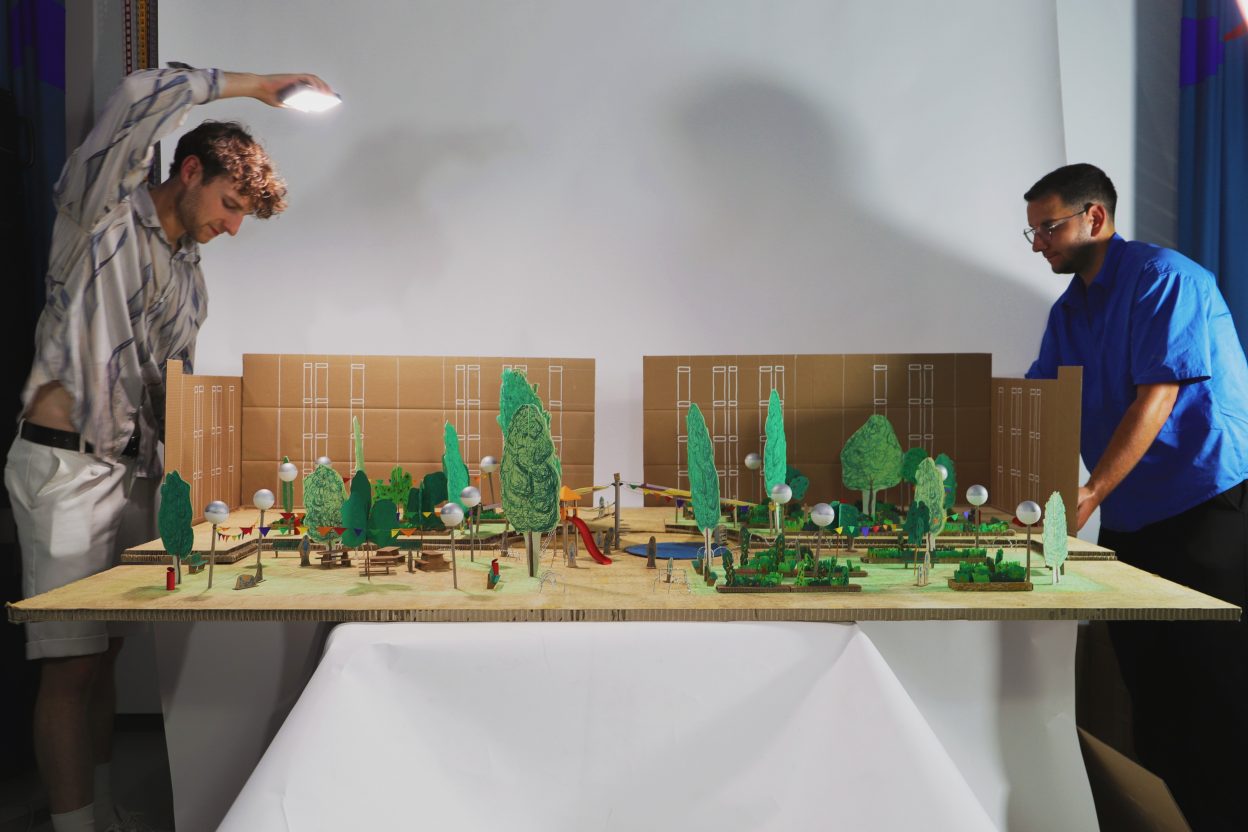
Le travail débutera par une série de rencontres et de visites de terrain. Cette étape aura pour objectif de relever, d’inventorier et de documenter les manières d’habiter déjà existantes dans les bâtiments. À partir de cette archive vivante des pratiques d’appropriation, les étudiant·e·x·s travailleront en maquettes avec les résident·e·x·s et travailleur·euse·x·s social·e·x·s pour imaginer de nouvelles possibilités d’agir. Iels seront invité·e·x·s à imaginer et concevoir ensemble des expérimentations de projet qui prolongent et transforment les expériences existantes ou qui en réinventent d’autres. Il s’agira à terme de proposer collectivement un projet sur l’ensemble du site.
Tout au long du semestre, en fonction des besoins, des personnes ou des associations issu·e·x·s de la société civile ou d’autres disciplines des arts et des sciences de l’espace seront invité·e·x·s à participer au travail collectif. Le semestre sera également ponctué de rencontres avec les autres ateliers, sous forme d’ « ateliers ouverts », permettant aux étudiant·e·x·s et au corps enseignant d’échanger sur les thématiques et les approches méthodologiques proposées. Une journée de critiques étudiantes réunissant les 3 ateliers de projet sera organisée au cours du semestre. La présence pendant les heures d’atelier est obligatoire et fait partie intégrante de l’évaluation finale.
The work will begin with a series of meetings and site visits. This stage will aim to identify, inventory, and document the ways of inhabiting already present in the buildings. Drawing on this living archive of appropriation practices, students will work with models alongside residents and social workers to imagine new possibilities for action. They will be invited to imagine and design together project experiments that extend and transform existing experiences, or invent new ones. The goal, ultimately, will be to collectively propose a project for the whole site.
Throughout the semester, depending on needs, individuals or associations from civil society or from other disciplines in the arts and spatial sciences will be invited to take part in the collective work. The semester will include also regular moments of exchange with the other studios, in the form of “open studios,” where students and teachers can share and discuss the themes and methodological approaches at play. A day of student critiques bringing together all 3 project studios will also take place during the semester. Presence during studio hours is expected and forms an integral part of the final evaluation.