

SEMINAIRE S1 JMA-GE
Métamorphose / Metamorphosis
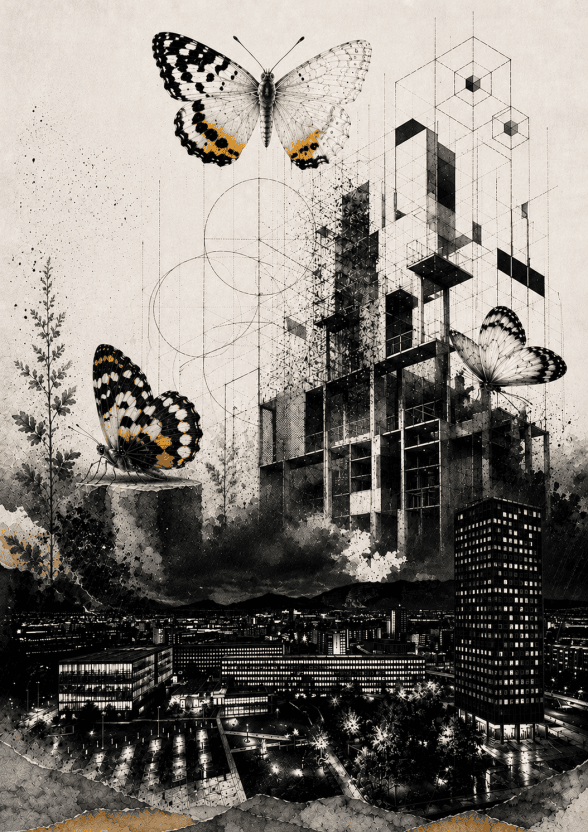 ©blancavelles
CONTENU / CONTENT
Les évolutions récentes du cadre normatif, notamment des normes SIA, invitent à reconsidérer les manières d’intervenir sur l’existant et, plus largement, les pratiques architecturales et urbanistiques. Le travail en site occupé en constitue une situation particulièrement révélatrice : la présence de l’existant, l’évolution des usages et le maintien des activités modifient profondément les conditions d’intervention et appellent une évolution des manières de projeter. Ils imposent de composer avec des situations qui ne peuvent être entièrement maîtrisées ni définies à l’avance.
Face à ces évolutions, la notion de métamorphose permet d’interroger une autre manière de projeter la transformation du bâti et du tissu urbain. Plutôt que de procéder par substitution, elle conduit à travailler à partir de ce qui est déjà là, de ses qualités et de ses usages, en intégrant les temporalités de la transformation et la capacité des lieux à continuer d’évoluer.
Recent changes to the regulatory framework, particularly the SIA standards, call for a reconsideration of how we intervene in existing contexts and, more broadly, of architectural and urban planning practices. Working on an occupied site is particularly revealing in this respect: the presence of existing structures, evolving uses and the need to maintain ongoing activities profoundly alter the conditions of intervention and call for an evolution in design approaches. They require working with situations that cannot be fully controlled or defined in advance.
In response to these changes, the notion of metamorphosis offers a way to explore a different approach to transforming buildings and the urban fabric. Rather than proceeding through replacement, it involves working with the as-found, its qualities and uses, while taking into account the temporalities of transformation and the capacity of places to continue evolving.
FORMES D’ENSEIGNEMENT / TEACHING METHODS
L’enseignement associe conférences, visites de site, interventions de professionnel·les, discussions collectives et travail en groupe.
Les étudiant·es travaillent notament en groupe. Les différents formats permettent de croiser apports théoriques, observations in situ et retours d’expérience, et d’alimenter les échanges tout au long du séminaire.
Le travail se conclut par une restitution collective des réflexions menées par les groupes.
Teaching combines lectures, site visits, contributions from practitioners, collective discussion and collaborative work.
These formats bring together theoretical perspectives, direct observation and professional experience, enabling students to address regulatory, spatial and operational questions from complementary viewpoints. Collaborative work supports the development and critical testing of ideas throughout the course.
The course concludes with a collective presentation and discussion of the work produced.