

S3 JMA-FR TRANSFORMATION
Réenchanter le voisinage
Orientation transformation
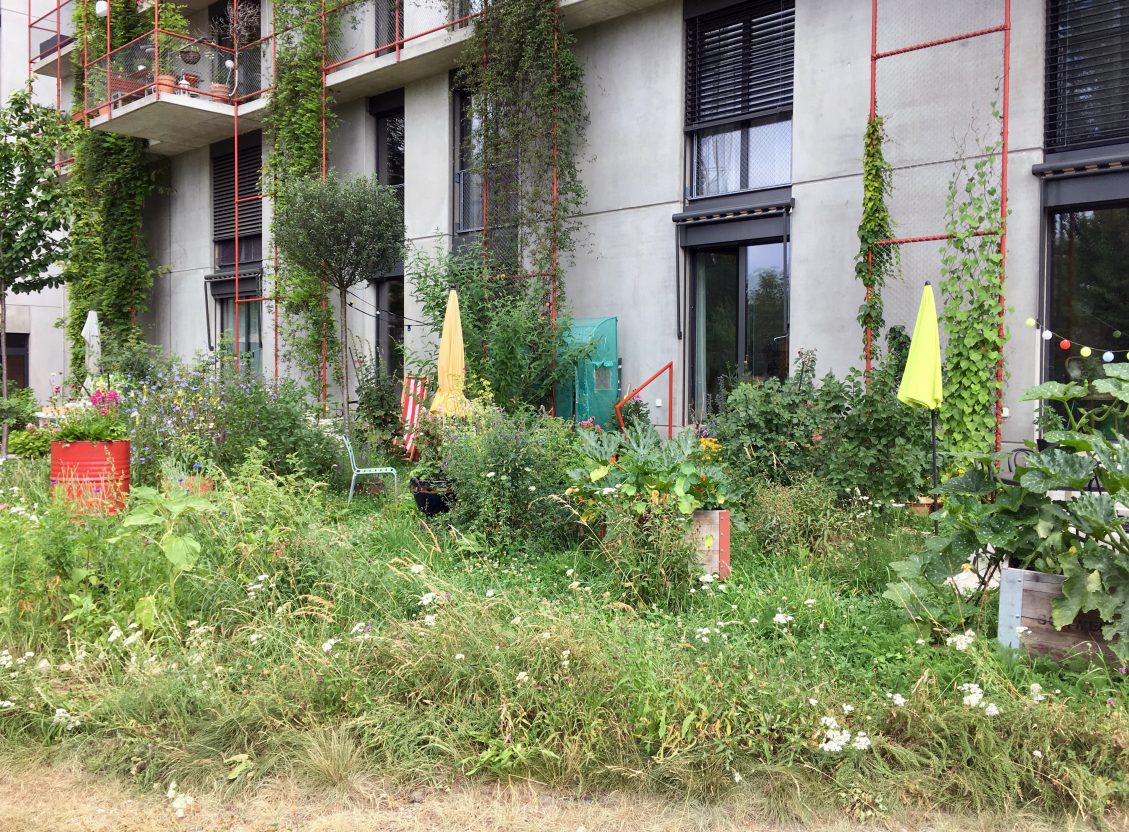 Kraftwerk1-Siedlung Zwicky Süd. Photo : © Sonia Curnier
 CONTENU CONTENT
Ce séminaire explorera les conditions spatiales et programmatiques d’une architecture susceptible de renforcer le vivre-ensemble dans les environnements urbains ordinaires que constituent les quartiers résidentiels. Il mobilisera des approches théoriques et projectuelles afin d’examiner les dimensions relationnelles et hospitalières qui s’y déploient. Il s’agira de réfléchir collectivement à la réactualisation des notions de « quotidien » et de « voisinage », héritées de la planification urbaine de la première moitié du XXe siècle, en les confrontant aux réalités sociales, spatiales, architecturales et économiques contemporaines. Une attention particulière sera portée aux formes de sociabilité qui émergent au pied des immeubles (dans les rez-de-chaussée, les entrées et leurs abords immédiats) afin d’analyser comment la conception de ces espaces peut contribuer à dynamiser les usages ordinaires, et plus largement, à favoriser les liens entre habitant·es.
This seminar will explore the spatial and programmatic conditions of an architecture capable of strengthening communal life within the ordinary urban environments of residential neighbourhoods. Drawing on both theoretical inquiry and design-based approaches, it will examine the relational and hospitable dimensions that unfold in these everyday settings. The seminar will collectively reconsider the notions of the everyday and the neighbourhood, inherited from the urban planning paradigms of the first half of the twentieth century, by confronting them with contemporary social, spatial, architectural, and economic realities. Particular attention will be paid to the forms of sociability that emerge in and around the ground level of residential buildings – in ground-floor spaces, entrance areas, and their immediate surroundings – in order to investigate how the design of these spaces can activate everyday uses and, more broadly, foster relationships among residents.
Objectifs d’enseignement TEACHING AIMS
Ce séminaire offre aux étudiant·es un cadre d’exploration collective qui leur permettra de :
- Se familiariser avec les notions théoriques de quotidien et voisinage dans leur interprétation historique et actuelle.
- Comprendre et mobiliser des modèles théoriques de villes, ainsi que des outils ethnographiques et narratifs, pour nourrir leur pratique projectuelle.
- Développer une capacité à concevoir ou transformer qualitativement des espaces de vie du quotidien.
- Contribuer à une culture commune de recherche, propre au séminaire, en développant des concepts, méthodes et références partagés.
This seminar provides students with a framework for collective inquiry through which they will:
- Become familiar with the theoretical concepts of the everyday and the neighbourhood, both in their historical interpretations and in their contemporary understandings.
- Understand and apply theoretical models of the city, together with ethnographic and narrative methods, to inform and enrich their design practice.
- Develop the ability to design or qualitatively transform spaces of everyday life.
- Contribute to the seminar’s shared research culture by developing common concepts, methods, and references.
Formes d’enseignement TEACHING METHODS
Le séminaire repose sur un processus d’apprentissage collectif associant enquêtes de terrain, restitutions narratives, lectures partagées et élaboration de scénarios projectuels. Ces activités seront nourries par des enseignements théoriques, des conférences d’intervenant·es externes et des visites de sites, qui enrichiront les analyses et les propositions développées par les étudiant·es.
Les architectes Germain Brisson et Katell Mallédan feront partie de l’équipe enseignante du séminaire.
The seminar is based on a collaborative learning process that combines field research, narrative accounts, shared readings, and the development of design strategies. These activities will be supplemented by theoretical inputs, lectures by guest speakers, and site visits, which will enrich the analyses and proposals developed by the students.
Architects Germain Brisson and Katell Mallédan will be part of the seminar’s teaching team.
INFORMATIONS COMPLÉMENTAIRES ADDITIONAL INFORMATION
Une visite à Berne est prévue le jeudi 26.11.2026 (date à confirmer).
A visit to Bern is scheduled for Thursday, November 26, 2026 (date to be confirmed).