OPTION JMA-BE
CBB is landing – Campus, Neighborhood, and Resources
CBB landet – Campus, Quartier und Ressourcen
 Ti
CONTENT / inhalt / contenu
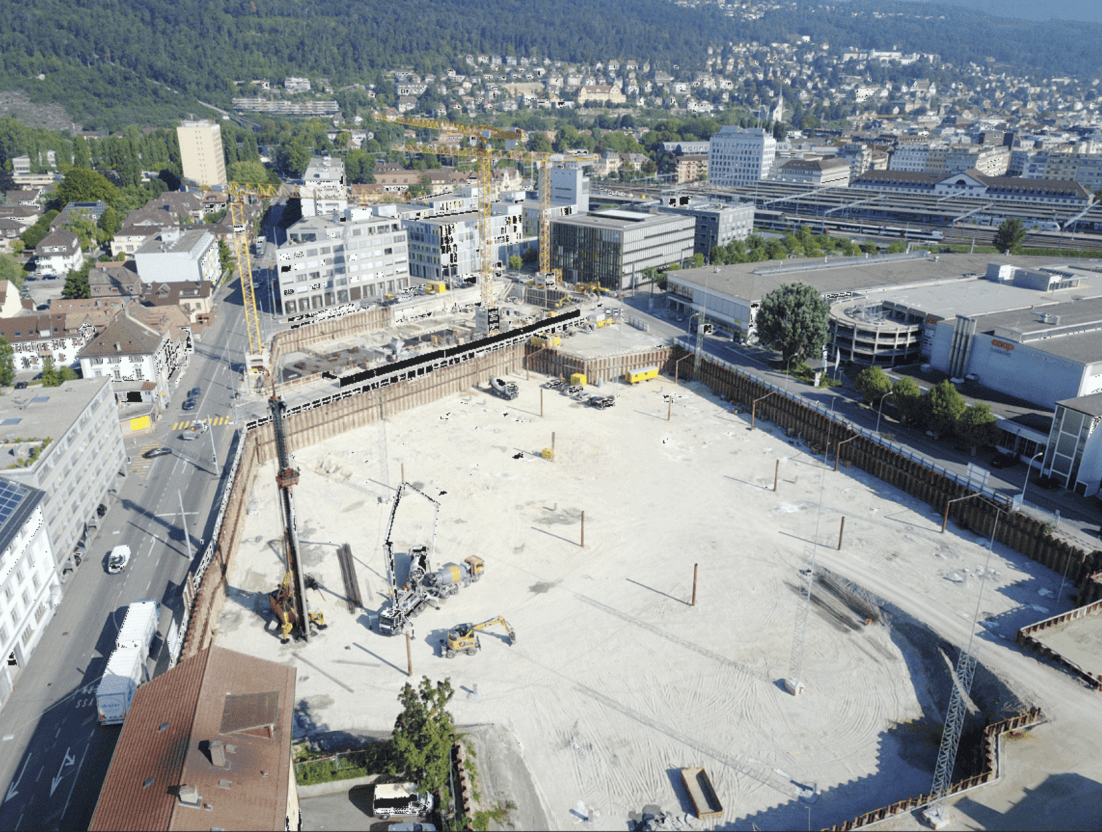
With the new Campus Biel/Bienne (CBB) in the station district, the relationship between the university and the city is changing. The neighbourhood south of the station is already undergoing a transformation. How the campus “lands” in the neighbourhood will depend above all on the spaces in between: its public spaces, ground floors, infrastructure and the spaces along the water.
The course starts from the situation of the Department of Architecture, Wood and Civil Engineering (AHB) in Biel/Bienne’s station district. It focuses on the old pumping station at Sagi-Loch, where the city, infrastructure and water meet. The site is a resource in two ways. It is a space that can be brought back into use, and its existing components and histories can provide the starting point for something new.
The course builds on work from a master’s design studio in spring 2025 and a master’s thesis in spring 2026. The City of Nidau, which owns the site, is open to exploring what can be done there. The module is designed to run over several semesters, following how the campus takes root in the neighbourhood over time.
Marcel Jäggi is a partner at pool Architektur, the practice behind the campus project. He shares his first-hand knowledge of the project as one of the perspectives students can draw on.
The course looks at how the campus takes root from two perspectives: common ground, meaning the uses, people and organisations, and public spaces that shape the neighbourhood, and resources, meaning the spaces, building components, materials and knowledge that are already there, lie unused or are becoming available. The course works as an on-site laboratory that brings together Cooperative Architecture of the Open City (KAOS) and Regenerative Architecture & Wood (RAW). Students observe, formulate ideas and put them into practice. Experimentation and iteration are central to the course, and mistakes are part of the learning process.
Mit dem Campus Biel/Bienne (CBB) im Bahnhofsquartier entsteht nicht einfach ein Gebäude, sondern eine veränderte Beziehung zwischen Hochschule und Stadt. Das Quartier südlich des Bahnhofs befindet sich in einem anhaltenden Transformationsprozess. Ob der Campus im Quartier «landet», entscheidet sich weniger im Gebäude als in den Räumen dazwischen: in öffentlichen Räumen, Erdgeschossen, Infrastrukturen – und am Wasser.
Ausgangspunkt ist die Situation der AHB im Bahnhofsquartier Biel/Bienne. Ein besonderer Fokus liegt auf dem alten Pumpwerk im Sagi-Loch – an der Schnittstelle von Stadt, Infrastruktur und Wasser. Der Ort ist Ressource im doppelten Sinn: als Raum, der wieder aktiviert werden kann, und als Bestand, dessen Teile und Geschichten Ausgangsmaterial für Neues sind. Vorarbeiten aus einem Masteratelier (FS 25) und einer Masterthesis (FS 26) bilden die Grundlage. Es besteht ein realer Handlungsspielraum mit Offenheit seitens der Eigentümerschaft (Stadt Nidau). Das Modul ist auf mehrere Semester angelegt und begleitet die Landung des Campus schrittweise.
Marcel Jäggi ist Partner bei pool Architektur, dem Büro hinter dem Campusprojekt. Diese Innensicht wird offen eingebracht – als Wissen, nicht als Deutungshoheit.
Der Kurs untersucht diese Landung mit zwei Blicken: auf den gemeinsamen Grund – Nutzungen, Akteur:innen, öffentlicher Raum – und auf die Ressourcen – Räume, Bauteile, Materialien und Wissen, die im Quartier bereits vorhanden sind, brachliegen oder frei werden. Der Kurs versteht sich als Labor vor Ort und verbindet die Ansätze der Kooperativen Architektur der offenen Stadt (KAOS) und der Regenerativen Architektur und Holz (RAW). Im Zentrum stehen drei Schritte: beobachten, formulieren, handeln. Experiment und Iteration sind zentral; Fehler gelten als Teil des Erkenntnisprozesses.
TEACHING AIMS / Lernziele / Objectifs d’enseignement
Identify the resources a site offers and use them to inform design decisions. Develop spatial strategies through open-ended processes and test them on site. Design interventions that can be reversed or built upon. Connect observation, intervention and reflection.
Ressourcen eines Ortes erkennen und als Entwurfsparameter einsetzen; räumliche Strategien in offenen Prozessen entwickeln und vor Ort testen; reversibel und weiterbaubar denken; Beobachtung, Intervention und Reflexion verbinden.
TEACHING METHODS / Lernformen / Formes d’enseignement
The 16-week course is organized into three phases:
- Read: Survey the site and identify available resources
- Connect: Explore relationships, identify local actors and consider possible uses. Present the findings at an interim review
- Test: Carry out a small, reversible intervention on site using existing resources. Present the results at the final review
16-wöchiger Kurs in drei Phasen:
- Lesen (Ort und vorhandene Ressourcen erfassen)
- Verknüpfen (Beziehungen, Akteur:innen und mögliche Nutzungen klären, Zwischenpräsentation)
- Testen (eine kleine, reversible Intervention vor Ort aus vorhandenen Ressourcen, Schlusspräsentation)